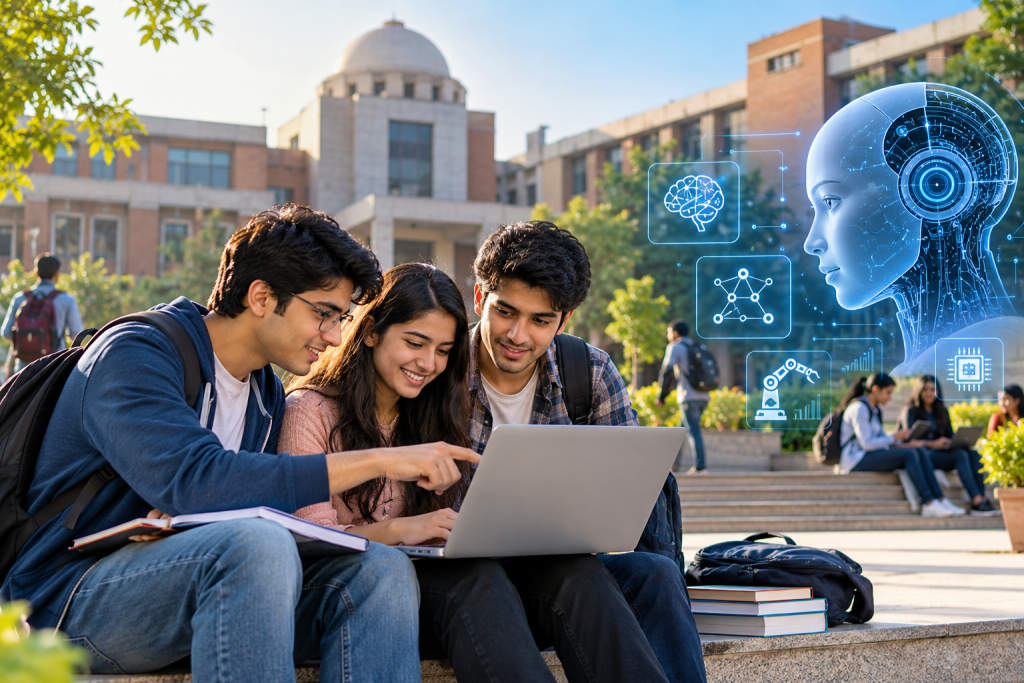
AI is changing the technology industry, and India’s engineering education system is facing a similar transformation. As companies increasingly look for engineers who can build, deploy and work with AI-driven technologies, students are beginning to rethink what they should expect from an undergraduate engineering degree.
For decades, admission to an IIT or another reputed engineering institution was considered the most desirable pathway into the technology industry. Entrance examination ranks, college reputation and placement records largely determined how students evaluated engineering colleges. However, the emergence of AI-first engineering education is introducing a new set of priorities, with curriculum relevance, practical experience and industry exposure becoming increasingly important.
How AI Is Changing Engineering Jobs and Industry Expectations
The growing adoption of artificial intelligence is transforming the skills required from engineering graduates. Tasks traditionally assigned to junior developers, including routine coding and debugging, are increasingly being assisted by AI tools. Employers are consequently placing greater emphasis on problem-solving, system design, critical thinking and the ability to evaluate AI-generated outputs.
A recent analysis of how AI is slowing junior tech hiring and raising the bar for engineering graduates in India highlights the growing gap between conventional engineering curricula and the expectations of technology employers.
This shift raises an important question: are engineering colleges in India adequately preparing students for an AI-driven workplace?
Merely introducing artificial intelligence as an elective subject may not be enough. Students need early exposure to programming, machine learning, generative AI, real-world software development and emerging technologies. Practical learning must become an integral part of engineering education rather than something reserved for internships or final-year projects.
Why Students Are Looking Beyond IITs and Traditional College Rankings
The changing expectations of the technology industry are also influencing how students choose engineering colleges. While institutional reputation remains important, a growing number of students are evaluating colleges based on what they can learn, build and experience during their undergraduate years.
This changing preference is particularly visible among students considering specialised technology institutions.
A recent report examining why students with international university offers and strong JEE scores are choosing Polaris School of Technology over Ivy League colleges illustrates this shift through the experiences of three students with different academic backgrounds.
Their decisions highlight an emerging consideration in engineering admissions: the quality of the learning experience can matter as much as the reputation of the institution.
At Polaris School of Technology (PST), Bengaluru, students are exposed to an AI-driven curriculum, hands-on coding, hackathons, entrepreneurship and industry engagement from the early stages of their undergraduate education. The institution’s approach reflects a broader shift towards engineering programmes that prioritise building technology rather than limiting learning to theoretical instruction.
For students evaluating the best engineering colleges beyond IITs, factors such as curriculum design, practical exposure, mentorship and access to the technology ecosystem are becoming increasingly relevant.
AI-First Undergraduate Programmes Are Creating New Pathways
Another significant development is the emergence of AI-first undergraduate programmes in India. These programmes are rethinking traditional computer science education by integrating artificial intelligence and contemporary technology skills into the learning experience from the beginning.
Historically, students who did not secure admission to IIT computer science programmes often viewed their options through the lens of conventional engineering branches and institutional rankings. Today, specialised undergraduate programmes are creating alternative pathways for students aspiring to build careers in AI and technology.
As highlighted in how AI-first undergraduate programmes are opening new pathways for students who did not secure IIT CSE, the expansion of specialised technology education is giving students more options beyond traditional engineering pathways.
Institutions such as Polaris School of Technology are part of this emerging category, emphasising programming, machine learning, AI applications, open-source contributions and industry-oriented projects.
The focus is on developing engineers who understand not just how to use emerging technologies, but also how to build products and solve problems using them.
What Should Students Look for in an AI-Focused Engineering College?
For students and parents evaluating engineering colleges in India, the changing technology landscape makes it important to look beyond rankings and admission cut-offs.
Some important factors to consider include:
- AI-first curriculum: Does the programme integrate artificial intelligence, machine learning and emerging technologies into its core curriculum?
- Hands-on coding experience: Do students get opportunities to build software and work on technical projects from the first semester?
- Industry exposure: Are internships, industry projects and practical assignments part of the learning experience?
- Mentorship: Can students learn from technology professionals, founders and experienced engineers?
- Innovation and entrepreneurship: Does the institution encourage students to experiment, build products and explore startup opportunities?
Ultimately, the future of engineering education in India will depend on how effectively institutions bridge the gap between academic learning and industry requirements.
As artificial intelligence continues to reshape technology careers, the value of an engineering degree will increasingly be measured by what students can build, the problems they can solve and how effectively they can adapt to new technologies. For the next generation of engineers, choosing a college may therefore become less about the name on the degree and more about the capabilities they develop along the way.